
Student Profiling Platform: How It Can Support Better Career Decisions
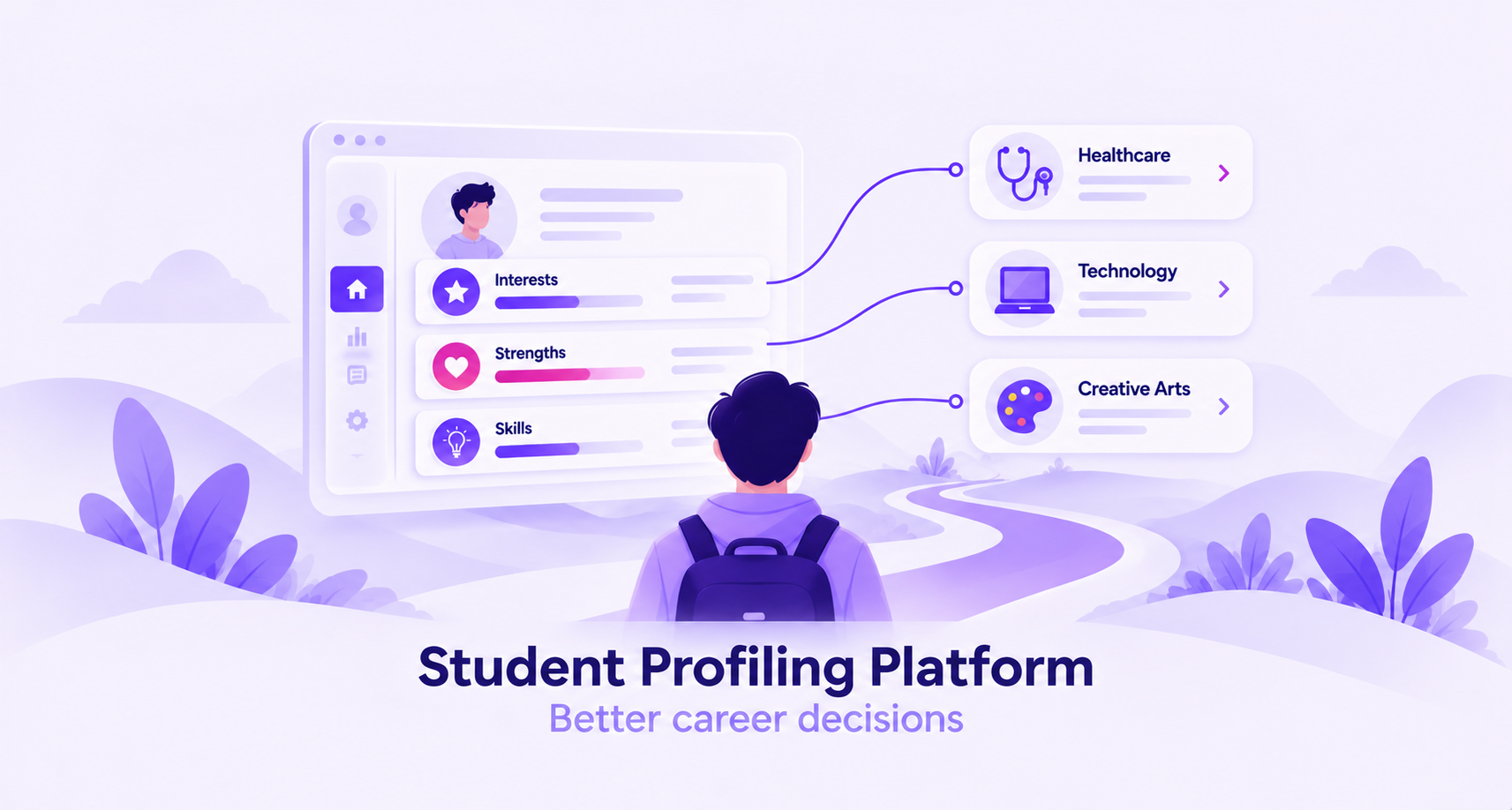
Most students choose subjects based on three things: last term's marks, what their friends are taking, and a parent's best guess. A student profiling platform adds a fourth, and it is often the missing one: an organised picture of who the student actually is.
Career choices feel huge at 15 or 16, and many students make them with very little information about themselves. Meanwhile, parents and teachers often see only one side of the student: home or school.
So, what goes into a profile, how does it become career options, and how do you pick a safe, useful platform? Here is what students, parents and schools should know.
What Does a Student Profiling Platform Actually Do?
A student profiling platform collects information about a student, analyses it and turns it into a structured profile. These profiles are then used to identify suitable subjects, courses and career paths based on each student’s strengths, interests and potential.
In practice, the process has four parts:
A profile shows who a student is today. To see which skills the world of work will need tomorrow, pair it with a future skills assessment.
Is student profiling the same as a career test?
A career test is just one piece of the puzzle. Student profiling takes a broader approach, bringing together a student's strengths, interests, skills and experiences to build a more complete picture of who they are and which paths may suit them. Here is how the main options compare:
Why Do So Many Students Find Career Decisions Hard?
Choosing a direction is hard when you do not yet know your own strengths. On top of that, most students have seen only a handful of jobs up close, usually those of family members and teachers.
The good news is that thinking ahead pays off. OECD research on career readiness analysed 12 datasets from 10 countries. It looked at students’ career attitudes and experiences at ages 14 to 16, then linked them to employment outcomes 10 to 15 years later. Secondary school students who explore, experience and think about their futures in work frequently experience lower levels of unemployment, receive higher wages and are happier in their careers as adults.
The OECD confirmed 11 indicators of career readiness, grouped into exploring, experiencing and thinking about the future. The thinking group includes career certainty, career ambition, career alignment and motivation towards school.
A student profiling platform cannot do the exploring for a student. However, it gives them a clear, personal starting point for all three, which is exactly where most students feel stuck.
How Does a Profile Turn Into Career Options?
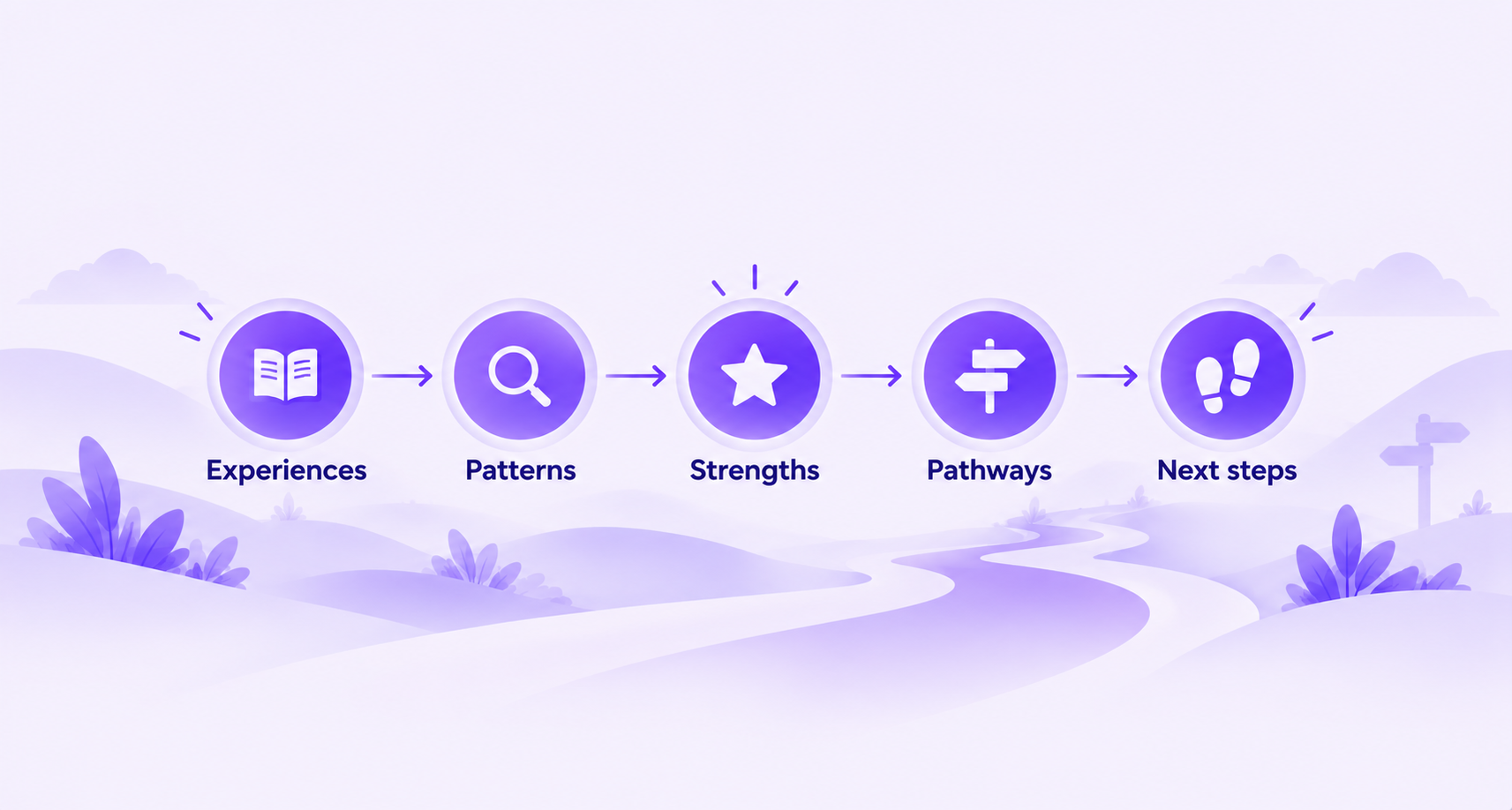
Think of a student profile as a guide to understanding a student's potential. It brings together the information needed to explore suitable subjects, courses and career paths. Most student profiling platforms follow a similar process:
The student shares experiences.
Achievements, hobbies, personal interests, causes they believe in, and moments that shaped them all help build a fuller picture of who they are.
The platform spots patterns.
It looks for strengths that appear again and again across those answers.
It sorts the strengths.
Some show up as dominant, while others are still developing.
It matches pathways.
Careers and courses that rely on those strengths rise to the top.
It suggests next steps.
Good platforms add practical options, such as courses, internships or scholarships.
What does this look like for a real student?
Take Rohan, a 16-year-old who thinks he should study engineering because his cousin did. This is an illustrative example, but the pattern is common. Here is what a student profiling platform showed him:
Engineering did not disappear from his list. Instead, Rohan now has two or three real options to explore, and he understands why each one fits.
How Can Students Get the Most Out of a Profiling Platform?
A student profiling platform is only as good as what goes into it and what happens afterwards. These steps make the difference:
Do some groundwork first.
Spend ten minutes listing proud moments and things that give you energy. Our guide to student strength analysis shows a simple method.
Answer with real examples.
Think of actual events, not the person you wish you were.
Include life outside school.
Part-time work, caring for siblings, sport and hobbies often reveal the strongest patterns.
Read the report with someone.
A parent, teacher or counsellor can help you spot what fits and what feels off.
Shortlist three pathways.
Fewer than three feels restrictive, while more than five is hard to explore properly.
Test one pathway in real life.
Try a short course, a work experience day or a conversation with someone in that job.
Update your profile every six to twelve months.
New experiences change the picture, so keep it current.

Once you have a shortlist, student career mapping helps you plan the route from today's subjects to each destination.
What Should Parents and Schools Check Before Choosing One?
Not every student profiling platform is built the same way. Because these tools handle young people's personal data and often use AI, it is worth asking a few direct questions first.
UNICEF's Guidance on AI and Children sets out 10 requirements for child-centred AI. Three are especially useful for families: protect children's data and privacy; provide transparency, explainability and accountability for children; and ensure non-discrimination and fairness for children.
With that in mind, use this checklist:
What Can a Student Profiling Platform Not Do?
A student profile can offer valuable direction, but it cannot make every decision for a student. Even the best student profiling platform has a few:
It cannot predict the future.
It shows strong fits, not guaranteed success.
It depends on honest answers.
Rushed or idealised responses produce a blurry profile.
It does not replace people.
Conversations with counsellors, teachers and people in real jobs still matter most.
It is a snapshot.
A profile from age 14 should not decide a choice made at 18.
Used thoughtfully, a student profile makes these conversations more meaningful, helping students ask better questions and explore their options with greater clarity.
How Does Student Profiling Work on LifeVitae?
LifeVitae builds its student profiling platform around life experiences, using the UNESCO and WHO Life Skills Framework as its foundation. Over 650,000 students trust it, and there are two main options.
LifeVitae Express: a quick strengths profile
With LifeVitae Express, students complete a structured, multiple-choice assessment focused on their life experiences and skills. AI then generates a personalised strengths profile that identifies dominant and developing skills, and suggests career pathways and learning opportunities.
It takes just 10 to 15 minutes, runs in a browser with no downloads, and produces a strengths and skills mapping report immediately. Students can retake it to track progress. LifeVitae collects only minimal personal details, such as name and school, and stores them in compliance with Singapore's PDPA 2012.
LifeVitae Advance: long-term career planning
LifeVitae Advance maps Life Achievements, Life Moments and Life Passions to tailored career pathways. It also offers more than 5 million data points on degrees, courses and other learning resources. These cover India, the USA, Canada, the UAE, Australia, the UK and other regions.
Teachers and counsellors get a dedicated dashboard to track progress and student development, and access runs on a 12-month rolling basis. Schools can request a demo to see it in action.
Is a Student Profiling Platform Worth It?
For most students, yes, as long as students use it as a starting point rather than a final answer. A good student profiling platform turns scattered experiences into a clear profile, narrows the options and gives families something concrete to discuss.
The real value comes afterwards: testing one pathway, learning from it and updating the profile as the student grows.
Frequently Asked Questions
What is a student profiling platform?
It is an online tool that combines a student's strengths, interests, skills and experiences into one profile. It then matches that profile with suitable subjects, courses and careers. Students and parents can then choose based on evidence rather than guesswork or peer pressure.
How is student profiling different from a career test?
A career test usually measures one thing, such as interests or aptitude. Student profiling brings several sources together, including life experiences, and links them to pathways. It also tends to support updates over time, so the profile grows with the student.
At what age is a student profiling platform most useful?
Many students benefit from a first profile at around 13 to 15, before choosing subjects. A second profile in the final school years helps with university and course decisions. Updating it every six to twelve months keeps the picture accurate.
Is student data safe on a profiling platform?
It depends on the platform. Check what personal data it collects, where it keeps that data and which privacy law it follows. Good platforms collect only what they need, explain how they use it and let schools and families understand how results are produced.
Can a profiling platform choose a career for my child?
A profiling platform shouldn’t choose a career for your child. It should help them understand their strengths, explore suitable career paths, and make more informed decisions. The final choice should come from the student’s interests, real-world experiences, and personal judgement, with the profile serving as a guide, not a decision-maker.
How often should a student update their profile?
Every six to twelve months works well for most students. Teenagers gain new experiences quickly, and interests can shift after a new subject, job or hobby. Regular updates keep the suggested pathways relevant and show how the student has grown.