
Student Strength Analysis: How Students Can Identify Their Strengths
Ask a teenager what they struggle with, and they will answer quickly. But ask what they are good at, and they may not know. A student strength analysis helps them understand their strengths with clear, real-life examples.
Strengths matter because they shape subject choices, career direction and even how motivated a student feels at school. Yet most students only hear about their gaps in report cards, mock exams and parent evenings.
So, what counts as a strength, how do you find yours, and which methods can you actually trust? Here is what students and parents should know, with a simple method you can start today.
What Is a Student Strength Analysis?
A student strength analysis is the process of spotting, checking and naming the qualities a student can rely on. It looks at personality, thinking style, character, and practical abilities, then turns them into a short list the student can use.
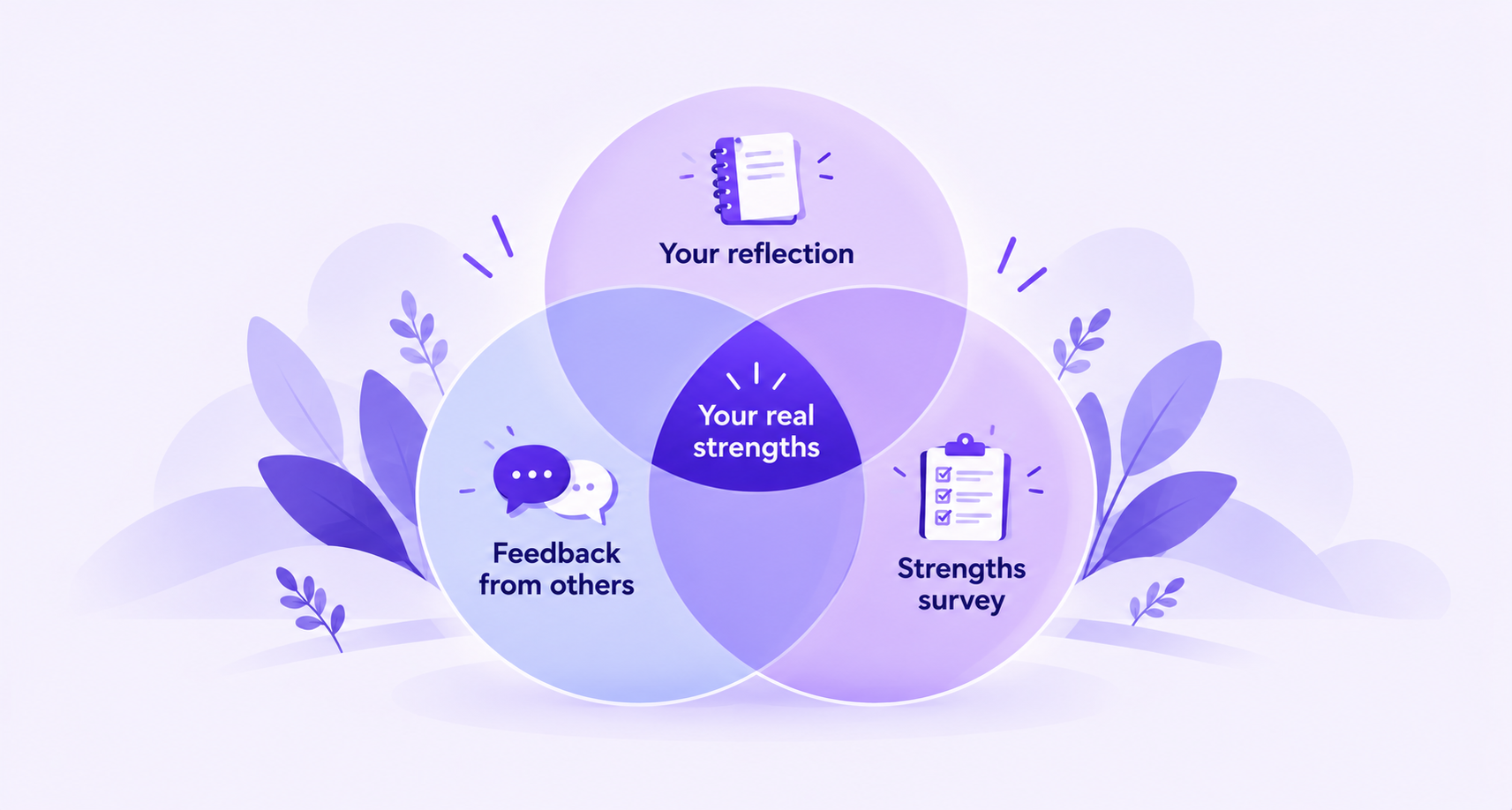
A helpful test is this: a true strength sits where three things meet.
You do it well. Results, feedback or finished work back it up.
It gives you energy. You lose track of time, or you want to do it again.
Others notice it. Friends, teachers or family mention it unprompted.
If only the first is true, you have a skill you can perform but may not enjoy. If only the second is true, you have an interest that still needs practice.
How are strengths different from skills, interests and aptitude?
These words get mixed up all the time, so here is a quick comparison:
Skills and strengths feed each other. For a closer look at which skills will matter most in the coming years, read our guide to the future skills assessment.
A student strength analysis usually covers several families of strengths. One widely used model comes from the VIA Institute on Character. It describes 24 character strengths grouped into six broad virtues: wisdom, courage, humanity, justice, temperance and transcendence. VIA says these virtue categories are universal across cultures and nations.
Here are common student strengths, grouped so they are easier to recognise:
Most of these strengths don't appear on a report card. That's why a student strength analysis should look beyond exam results.
How Can a Student Find Their Strengths?
You do not need an expensive test to start a student strength analysis. Instead, work through these six steps over a week or two. Each step adds a different kind of evidence.
List five proud moments. Write down times you felt genuinely proud, in or out of school. Next to each, note what you actually did, not just the result.
Track your energy for a week. Each evening, note one task that drained you and one that gave you energy. Patterns appear quickly.
Ask three to five people for a story. Ask a teacher, a friend, a relative or a coach: "When have you seen me at my best?" Stories beat compliments, because they show the strength in action.
Take one validated strengths survey. A free, research-based survey gives you a shared vocabulary for what you are seeing.
Look for overlaps. Circle any strength that appears in at least two of the sources above. Those form the core of your student strength analysis.
Test one strength in real life. Volunteer for a role that uses it, such as leading a club activity, then check how it felt and how it went.

What does this look like for a real student?
Take Aisha, a 15-year-old who says she is "not good at anything special". This is an illustrative example, but the pattern is common. Here is what her student strength analysis showed after one week:
Aisha's grades never showed this. However, once she named it, she joined the student council events team and started exploring careers in project management and event planning.
Which Student Strength Analysis Methods Can You Trust?
Each method has its limitations, so the best student strength analysis uses a mix of different methods. Here is how the main options compare.
Which free tools are worth trying?
The VIA Youth Survey is a research-validated survey for ages 8 to 17, and VIA says it takes about 10 minutes to complete. According to VIA, nearly 35 million people worldwide have taken it.
For feedback, the University of Michigan's Centre for Positive Organisations offers the Reflected Best Self Exercise. It describes the tool as a personal development tool that helps you see who you are at your best. People from your life and work share stories of moments when they have seen you at your best. You then create a Best Self Portrait and a plan for putting more of your best self into action.
This is a simple version of the same idea that costs nothing. If a full online exercise feels like too much, start there: ask three people for one story each, and you will already have useful evidence.
Why Does Knowing Your Strengths Help at School?
A student strength analysis isn't just a feel-good exercise. Gallup notes that young adults who know and use their strengths are more engaged in their schooling.
Gallup's 2024 meta-analysis points the same way. It reviewed six independent studies covering 9,113 students. The results suggest strengths-based programmes could make students 25% less likely to drop out between their first and second year of university.
In everyday terms, strengths help students in three ways:
Better choices: subjects and courses that fit how you work, not just what friends pick.
More motivation: using a strength feels rewarding, which makes hard work easier to sustain.
Stronger applications: specific strengths with real examples stand out in personal statements and interviews.
Once your strengths are clear, the next step is linking them to real options. Our guide to student career mapping shows how to turn them into a route through subjects, courses and careers.
What Mistakes Do Students Make When Judging Their Strengths?
Even with good intentions, a student strength analysis can go wrong. These are the most common traps and what to do instead:
How Can Parents Help Without Taking Over?
Parents often see strengths first, but a parent’s label can feel like pressure. In a student strength analysis, the aim is to guide the discovery, not hand over the answer.
Ask open questions, such as "What part of today did you enjoy most?"
Share specific stories of when you saw your child at their best.
Notice effort and energy, not just results.
Avoid fixed labels like "the creative one" or "the clever one".
Let your child choose which strength to test first.
Parents who want to see how strengths connect to the workplace later on can also read our guide to the employability skills assessment.
How Does LifeVitae Analyse Student Strengths?
LifeVitae builds its student strength analysis on real-life experiences rather than abstract questions. It looks at three areas:
Life Achievements: accomplishments that matter to you and highlight your successes in your life.
Life Passions: hobbies and causes that you are interested in and deeply connected to.
Life Moments: situations you have experienced and can relate to.
With LifeVitae Express, students complete a structured, multiple-choice assessment focused on their life experiences and skills. AI then generates a personalised strengths profile that identifies dominant and developing skills and suggests career pathways based on those strengths.
The assessment takes just 10 to 15 minutes, and the strengths and skills mapping report arrives immediately after completion. Students can also retake it to track progress over time.
For deeper, long-term planning, LifeVitae Advance maps Life Achievements, Life Moments, and Life Passions to tailored career pathways. Over 650,000 students trust LifeVitae, and schools can request a demo to see the institution dashboard.
What Happens After You Know Your Strengths?
A student strength analysis is the start, not the finish. Pick one strength, use it intentionally this month, and notice how your confidence and results change.
Then repeat your student strength analysis once a year. Strengths grow with new experiences, and a fresh look keeps your plans honest.
When you are ready, try the LifeVitae Express assessment and see which strengths your own life story already shows.
Frequently Asked Questions
What is a student strength analysis?
It is a structured way to identify what a student does well, enjoys and gets noticed for. It combines self-reflection, feedback from others, and a strengths survey. The overlapping results become a short list of strengths to guide subject, course and career decisions.
How do I know my strengths as a student?
Start with your proudest moments, then notice which tasks energise you. Ask a few people when they have seen you at your best, and take one free strengths survey. Any strength that appears in two or more of these sources is likely real.
What are the most common strengths of a student?
Common student strengths include curiosity, creativity, perseverance, teamwork, leadership, kindness and clear communication. Practical strengths such as building, designing or performing count too. Most students have a mix of thinking, people and character strengths rather than just one.
At what age should a student analyse their strengths?
Many students benefit from a first student strength analysis between 13 and 15, before choosing subjects. Younger children can still explore strengths through simple conversations, and older students should repeat the process before university or career decisions.
Can a student's strengths change over time?
Yes. Core character strengths tend to stay fairly stable, but new experiences, practice and confidence can bring other strengths forward. That is why repeating the analysis every year or so gives a more accurate picture than a single result from early school years.
Is an online strengths test enough on its own?
No. A test gives you useful language to describe your strengths, but your answers may reflect your mood or self-image on the day. Combine the results with real examples from your life and feedback from people who know you. Then, look for strengths that appear consistently across all three.