
Future Skills Assessment: What Skills Will Students Need?
Future Skills Assessment: What Skills Will Students Need?
Ask a Grade 10 student what job they want, and you will probably hear a job title. Ask which skills that job will need in 2030, and the room usually goes quiet. That silence is exactly why a future skills assessment matters.
The world of work is already changing. The World Economic Forum's Future of Jobs Report 2025 surveyed more than 1,000 of the world's largest employers, representing over 14 million workers. It expects global trends to create about 170 million new jobs this decade and displace 92 million roles, a net gain of 78 million jobs.
So, what does a future skills assessment measure, which skills will students need most, and why can't grades show them? Here is what students and parents should know.
What Does a Future Skills Assessment Actually Measure?
A future skills assessment looks at the skills a student will need for jobs that may change shape several times before they retire. Instead of testing what a student remembers, it looks at how they think, learn, adapt and work with people.
Most assessments cover three layers:
Technology skills: comfort with digital tools, data and AI, plus a basic grasp of staying safe online.
Thinking skills: analytical thinking, creative thinking and problem solving.
Human skills: resilience, flexibility, curiosity, leadership and working well with others.
In practice, schools and platforms often fold this into a wider life skills assessment or human skills assessment. The labels vary, but the aim stays the same: a clear picture of readiness that goes beyond marks.
For the workplace angle, our guide to the employability skills assessment explains what employers look for when students start their careers.
Which Skills Will Students Need Most by 2030?
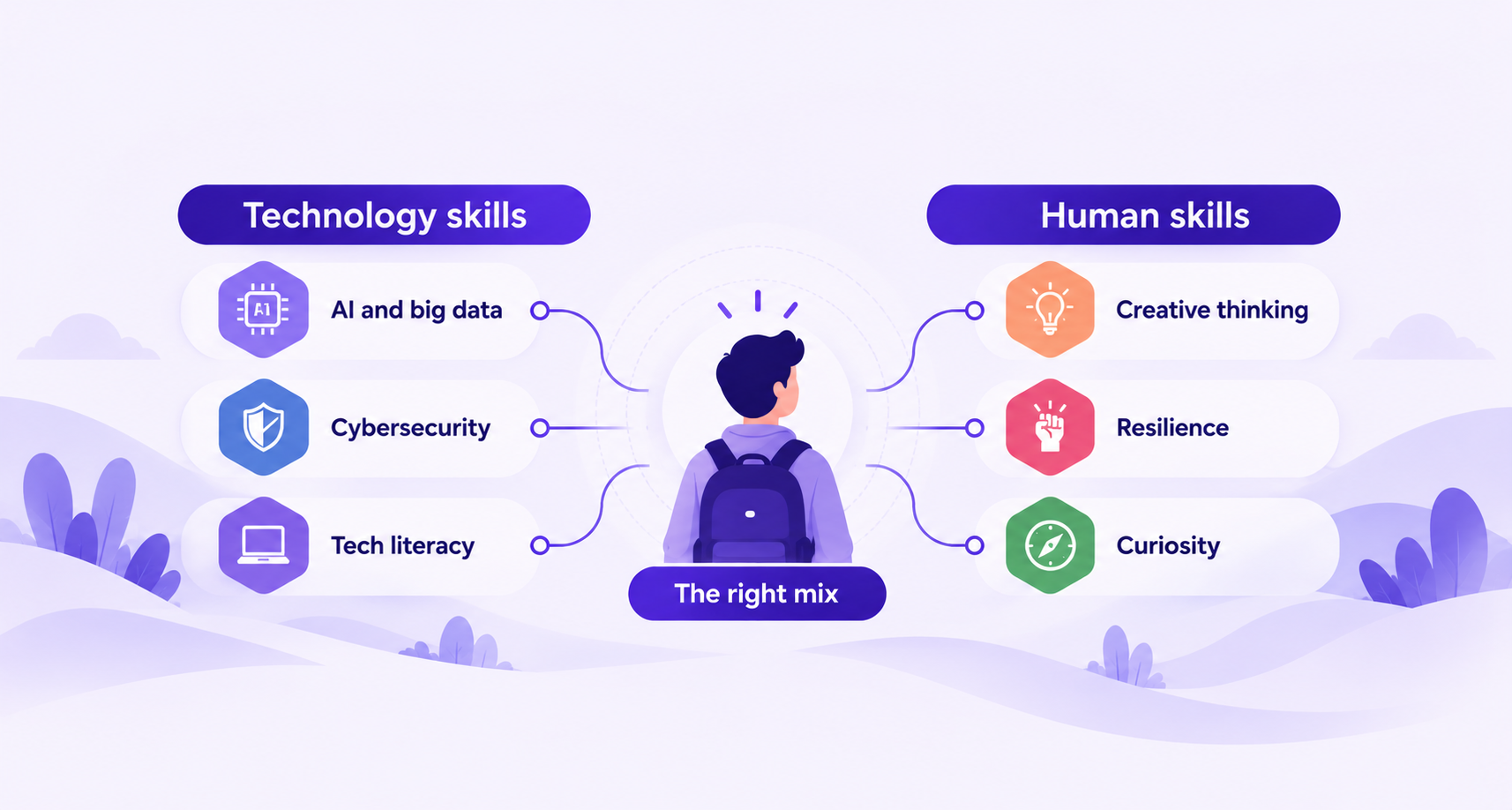
According to the World Economic Forum, the fastest-growing skills by 2030 are AI and big data, networks and cybersecurity, and technological literacy. Creative thinking, resilience, flexibility and agility, and curiosity and lifelong learning follow close behind. Leadership and social influence, talent management, analytical thinking and environmental stewardship complete the top ten.
Here is what each one can look like in a student's everyday life
Why do human skills matter as much as technical ones?
It is easy to think that every student should learn coding or other technical skills. However, the World Economic Forum’s Future of Jobs Report 2025 shows that both technical and human skills will be important for future work. AI and big data are among the fastest-growing skills, but employers also expect skills such as creative thinking, resilience, flexibility, leadership and collaboration to remain important.
The job trends show a similar mix. Fast-growing roles include big data specialists, fintech engineers and AI specialists. At the same time, many new jobs are expected in areas such as farming, delivery, software development, construction and retail.
The future of work will require more than technical knowledge. Students will need to adapt, communicate, solve problems and work well with others across different types of jobs.
Why Can't Grades Show If a Student Is Future Ready?
Grades show how well a student understands a subject at a particular point in time. They are important, but they do not show everything. Skills like curiosity, resilience and leadership are also important, yet they are rarely reflected in a report card.
A future skills assessment fills that gap. It draws on evidence from a student's whole life, not only the exam hall.
What did the first global test of creative thinking find?
In 2022, the OECD's PISA programme assessed creative thinking for the first time across 64 countries and economies. It defined creative thinking as students' capacity to produce original and diverse ideas.
Singapore came out on top. According to Singapore's Ministry of Education, 6 in 10 Singapore students reached the two highest proficiency levels. In addition, 73 per cent agreed that creativity is not limited to the arts.
The OECD also named Korea, Estonia and Finland, along with Canada, Australia and New Zealand, among the highest-performing systems. For parents, the takeaway is simple: creative thinking is no longer vague. Education systems now measure it seriously, and a future skills assessment lets families do the same.
Here is how the two approaches compare:
Is a Future Skills Assessment the Same as an Aptitude or Career Test?
No. They overlap, but each one answers a different question. The table below shows where each tool fits best.
The best approach is to use these assessments together. For example, a career interest test might show that a student is interested in design. A future skills assessment can then highlight strengths such as creative thinking while identifying areas for improvement, such as digital tools or communication. This gives the student a clearer idea of what to work on next.
What Are the Biggest Myths About Future Skills?
How Can Students Build Future Skills Before They Leave School?
Knowing the skills is only half the story. Building them is where the real progress happens, and it rarely needs expensive extras. Here is a practical plan:
Take a baseline future skills assessment.
Note where you are strong and where you are thin across technology, thinking and human skills.
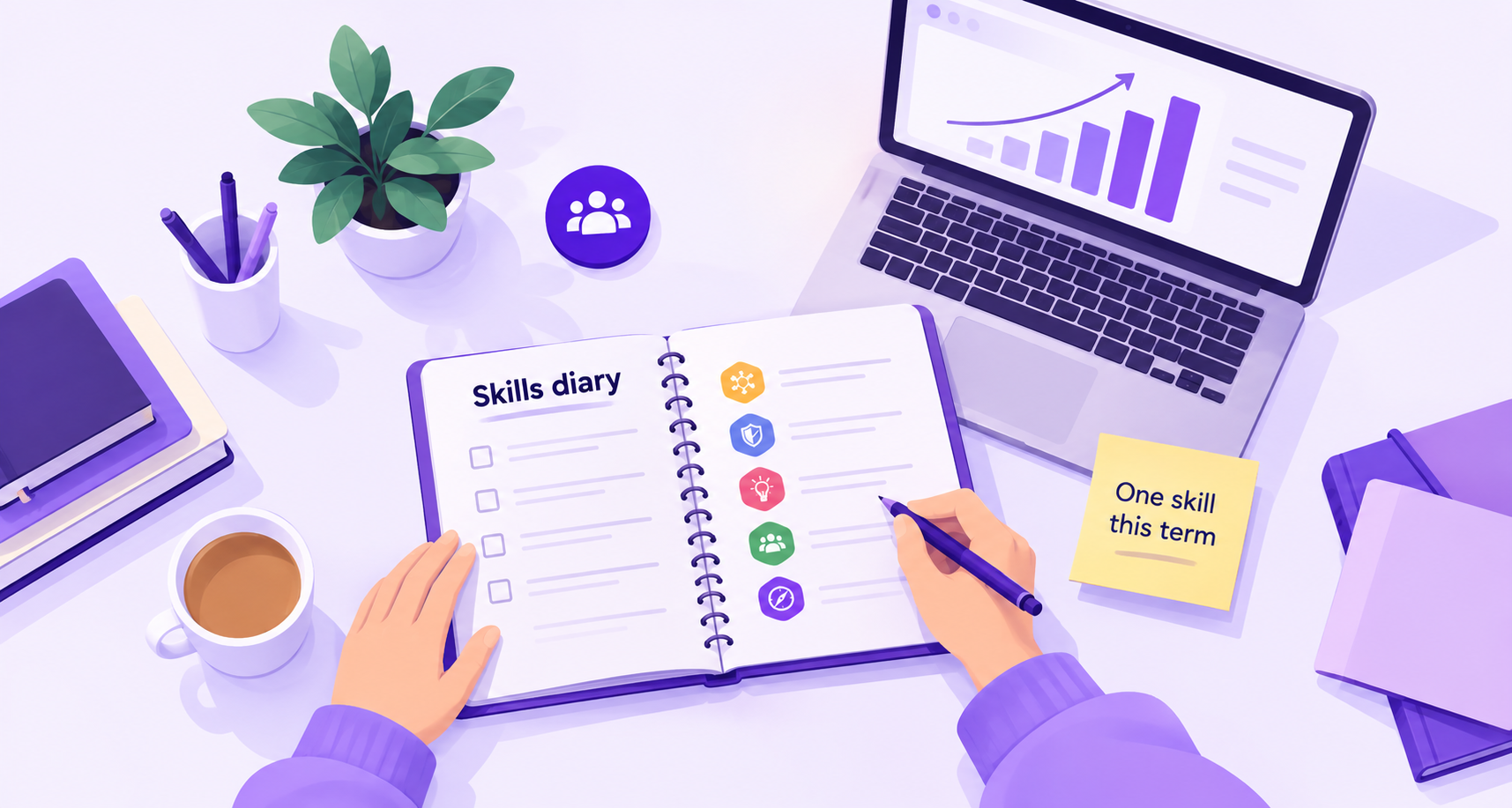
Pick one rising skill for this term.
One is enough. For instance, choose curiosity and finish a short free course outside your syllabus.
Turn school life into skill evidence.
Running a club shows leadership. Rescuing a failed science project shows resilience. Write down what you did and what you learned.
Use AI tools, but question them.
Ask a chatbot to explain a topic, then check its answer against your textbook. This builds AI literacy and analytical thinking at once.
Try one real project.
A weekend market stall, a neighbourhood clean-up, or a school podcast builds several skills at once.
Reassess after six to twelve months.
Repeat the future skills assessment, notice what moved and adjust your plan.
Once you know your strengths, the next move is linking them to real destinations. Our guide to student career mapping shows how to turn skill results into a route through subjects, courses and careers.
What Should Parents Look for in a Good Assessment?
Not every tool with the label does the same job. So, before your child takes a future skills assessment, check these points:
It covers both technology and human skills, not only personality or interests.
It uses evidence from real life, such as activities, hobbies and experiences.
It explains results in plain language that a teenager can understand.
It suggests concrete next steps, such as courses, books or projects.
It rests on a recognised framework, and experts have checked it.
It lets your child reassess later, so progress becomes visible.
If an assessment only gives your child a label, it is not enough. Look for one that also helps them understand what to do next. Schools can use the same checklist when choosing a student skills assessment platform.
How Does LifeVitae Approach Future Skills?
LifeVitae starts from a simple idea: a student's life already holds evidence of their skills. The platform uses the UNESCO and WHO Life Skills Framework as its foundation and looks at three kinds of experience:
Life Achievements: accomplishments that matter to you and highlight your successes in your life.
Life Passions: hobbies and causes that you are interested in and deeply connected to.
Life Moments: situations that individuals have experienced during life and can resonate with.
It then uses AI and natural language processing to align those experiences with practical career recommendations based on each student's strengths. Recommendations can include books, courses, internships and scholarships.
Today, LifeVitae is trusted by over 650,000 students, and renowned institutes and psychologists have validated the platform. Students can start with LifeVitae Express, which offers personalised career insights in just 10-15 minutes. Schools and universities that want deeper, long-term planning can explore LifeVitae Advance.
Where Should a Student Start?
Start small. Take an honest future skills assessment, choose one skill to improve, and find ways to build it into everyday life.
Jobs will continue to change by 2030 and beyond. Students who understand their strengths and keep building their skills will be better prepared for whatever comes next.
Schools and counsellors can request a LifeVitae demo to see how students' own experiences can shape their next steps.
Frequently Asked Questions
What is a future skills assessment?
It is a structured way to check whether a student is building the skills that will stay useful as jobs change. It usually covers technology, thinking and human skills. It then turns the results into clear next steps rather than a label.
Which future skills matter most for students?
The fastest-growing skills include AI and big data, cybersecurity and technological literacy. Creative thinking, resilience, flexibility, curiosity, leadership and analytical thinking also rank highly. Students benefit most from a balanced mix of technical and human skills rather than focusing on one area.
At what age should a student take a future skills assessment?
Many students benefit from taking their first assessment around ages 13 to 15, before choosing their subjects. A second assessment during the final school years can help track their progress and guide university and course choices. Repeating the assessment regularly helps students stay on track.
Can students improve their future skills?
Yes. Skills such as creative thinking, resilience and leadership grow through practice, reflection and real projects. Running a club, finishing a short course or fixing a failed project all build them. Tracking these efforts over a year usually shows clear, measurable progress.
How is a future skills assessment different from an employability skills assessment?
An employability skills assessment checks whether a student is ready for the workplace now. A future skills assessment looks further ahead at skills that will stay valuable as jobs change. Used together, they show both current readiness and long-term direction.
How often should a student repeat a future skills assessment?
Once every six to twelve months works well for most students. That gap gives enough time to practise a skill, collect evidence and see real change. Repeating it too often shows little movement, while waiting several years misses the chance to adjust plans.